
What Is a 3D Pen?
How it works, the three kinds, what it costs, and when a 3D printer is the better buy.
The short answer
A 3D pen is a handheld tool that melts plastic filament and pushes it out of a heated tip, so you can draw lines that harden in seconds and stand up off the page. Think of it as a 3D printer you steer by hand: no computer, no software, no files. Most branded pens cost $30 to $100.
We don't own or test 3D pens. Specs on this page come from the makers' own listings, prices from US store listings, and the hands-on verdict from Wirecutter, which tested 14 pens. How we research.

How does a 3D pen work?
A standard 3D pen holds three parts: a small motor, a heater and a nozzle. You push a strand of plastic filament into the back. Press the button and the motor feeds it forward into the heater, where it softens. It leaves the tip as a thin, warm line that cools and sets within seconds (3Doodler).
That is the same process an FDM 3D printer uses, which we break down in what is FDM printing. The difference is who moves the nozzle. A printer follows a file from a computer, one layer at a time. A pen follows your hand.
What are the different types of 3D pens?
There are three. The type decides how safe the pen is, which refills it takes and who it suits.
| Type | How the line sets | Refills | Tip | Usual age rating |
|---|---|---|---|---|
| Hot pen | Melted plastic cools | 1.75mm PLA or ABS, the same filament most 3D printers use | Hot enough to burn | 14 and up |
| Low-temp pen | Low-heat plastic cools | The maker's own strands only | Safe to touch | 6 and up |
| UV resin pen | A UV light at the tip hardens liquid resin | Resin cartridges | No heat | Check the box |
Hot pens are what most people mean by "3D pen." The 3Doodler Flow, SCRIB3D P1 and MYNT3D Super are all hot pens that take standard 1.75mm PLA and ABS. Low-temp pens trade range for safety: the 3Doodler Start+ has no hot outer parts and is rated for ages 6 to 13, but it only runs 3Doodler's own 2.5mm Eco-Plastic (MatterHackers listing). UV pens such as CreoPop skip heat altogether and cure a photopolymer with a small UV light (TCT Magazine). They are a niche, and you won't find many on store shelves. Resin printers work on the same principle, covered in our resin printing guide.
What can you make with a 3D pen?
Three kinds of things, mostly.
- Art and crafts. Trace a printed stencil on a flat sheet, peel the shape off, then join flat pieces into 3D objects with more filament. Most of 3Doodler's free tutorials work this way, from pencil cases to small figures.
- Small fixes. A hot pen lays down molten plastic, so it can fill gaps and patch broken plastic parts. 3Doodler sells the Flow partly on DIY home fixes.
- Rough models. Designers, architects and students use pens to sketch a shape in the air before anyone opens CAD software.
What a pen won't make is anything precise. Every line is only as steady as your hand, so parts that need to fit, repeat or carry weight belong on a printer.
How do you use a 3D pen?
The basics take minutes. This follows 3Doodler's own steps.
- 1. Heat it up. Plug in or charge the pen and set the temperature for your filament. PLA and ABS need different settings, so check the manual.
- 2. Load the filament. Push a strand into the back until the motor grabs it.
- 3. Draw flat first. Press the button and trace a stencil slowly on paper or a plastic sheet. Let it cool, then peel it off.
- 4. Build up. Join flat pieces with small dabs of filament to make a 3D shape.
Work on a heat-safe surface. 3Doodler suggests paper, glass, clay or wood for its hot pens. Keep fingers away from the tip. Some pens switch themselves off when idle: the SCRIB3D P1 sleeps after two minutes.
Can you use 3D printer filament in a 3D pen?
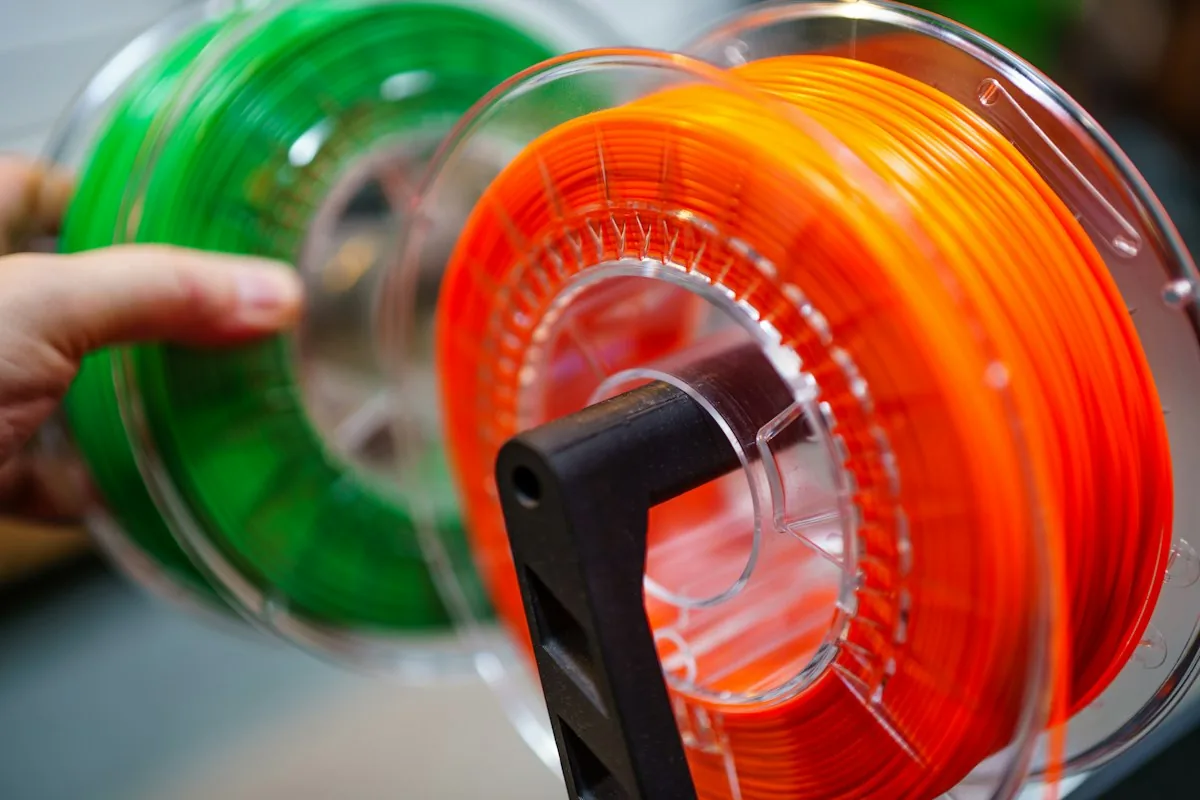
Usually, yes. Most hot pens take 1.75mm PLA or ABS, the same diameter most 3D printers use, so printer filament fits. The 3Doodler Flow and the SCRIB3D P1 both list 1.75mm PLA and ABS. Low-temp and UV pens are the exception: they only run their maker's own refills.
Pen refill packs come as short coils in lots of colors, which suits drawing. A printer spool gives you far more plastic, but in one color. Check your pen's manual for the filament types and diameter it accepts before you buy either.
How much does a 3D pen cost?
Most branded pens cost $30 to $100. Refills start at about $13 for a mixed-color pack. These are ranges from US store listings, not quotes, because pen prices move often.
| Pen | Type | Filament | Rated age | Typical price |
|---|---|---|---|---|
| SCRIB3D P1 | Hot | 1.75mm PLA or ABS | 14 and up | About $30 to $40 |
| 3Doodler Start+ | Low-temp | 2.5mm Eco-Plastic only | 6 to 13 | About $50 |
| 3Doodler Flow | Hot | 1.75mm PLA or ABS | 14 and up | About $80 to $100 |
| MYNT3D Super | Hot | 1.75mm PLA or ABS | Check the box | About $95 |
Unbranded pens sell for less, around $25 at big-box stores. Prices from Walmart, MatterHackers and 3Doodler.
What age is a 3D pen for?
It depends on the type. Hot pens are rated 14 and up: that is the rating on both the 3Doodler Flow and the SCRIB3D P1, because the tip gets hot enough to burn. For younger kids, the 3Doodler Start+ is built for ages 6 to 13, with no hot outer parts and low-heat plastic. Supervise young users with any pen.
3D pen vs 3D printer: which should you buy?
They use the same plastic and the same basic idea, but they do different jobs.
| 3D pen | 3D printer | |
|---|---|---|
| How you make things | Freehand, line by line | From a digital file, layer by layer |
| Precision | As steady as your hand | Repeats the same part exactly |
| Computer needed | No | Usually, to prepare files. Some run from an app |
| Best for | Art, crafts, small fixes, quick sketches | Functional parts, copies, anything that has to fit |
| Learning curve | Minutes | Hours to days |
| Cost | About $30 to $100 | Good entry machines under $300 |
Get a pen if you want to make things with your hands right away and don't need precision. Get a printer if you want parts that fit, repeat or hold weight. Plenty of people start with a pen and move up. If that's you, our guide to the best 3D printers under $300 covers the machines worth buying now, and do you need to buy a 3D printer? covers whether you need one at all. New to printers? Start with how 3D printers work.
Is a 3D pen worth it?
Yes, if you'll use it for crafts, small fixes or teaching kids how 3D printing works. Wirecutter tested 14 pens and its pick is the 3Doodler Flow, a hot pen in the middle of the price range.
No, if you want usable parts. A pen can't repeat a shape or hold an exact size. That is the job a 3D printer does, and good entry machines now cost under $300.
Sources