
Is 3D printing expensive? Less than most people think. A capable starter printer costs $179 today, and a typical small print uses about a dollar of plastic and a few cents of power. The real costs hide elsewhere: failed prints, wear parts, and the urge to upgrade. Here is where the money goes.
We do not own or test printers. This guide uses maker prices, maker spec sheets and published cost data, each named in the text. Read how we research.
We may earn a commission from links on this page. We do not own or test the printers we write about.
How much does a 3D printer cost?
Home printers fall into five rough tiers. The tier you pick decides most of what you spend in year one, so choose it before you choose a model. Prices below come from each maker’s own store and update on their own. Our 3D printer price tracker lists every model we follow.
| Tier and example printer | Price now | Regular price | Stock | Store |
|---|---|---|---|---|
| Creality Ender-3 V3 SEStarter FDM, one color | $179 sale | $199 | In stock | Check at Creality |
| Elegoo Mars 5Starter resin, fine detail | $179 sale | $225 | In stock | Check at Elegoo |
| Anycubic Kobra 4 ComboBudget multicolor | $299 sale | $499 | In stock | Check at Anycubic |
| Elegoo Centauri Carbon 2Mid-range, enclosed | $319 sale | $359 | In stock | Check at Elegoo |
| Creality K2 Plus ComboLarge, enclosed, multicolor | $1,199 sale | $1,499 | In stock | Check at Creality |
Above this range sit professional machines that cost thousands. They solve problems a hobbyist does not have. Below it sit old stock and no-name printers. A cheaper printer can cost more in the end, because every hour spent fixing it is an hour not printing. For more choice at the low end, see the best 3D printers under $300.
How much does it cost to 3D print something?
For most small prints, a dollar or two. The math is simple: the weight of the part times the price of the material, plus the power the printer draws while it works.
- Filament. PLA, the standard material, usually costs $20 to $30 a kilogram, according to filament and resin maker Siraya Tech. Snapmaker’s cost guide works through a $22 spool: 2.2 cents a gram, so a 50 gram print costs $1.10 in plastic.
- Resin. Siraya Tech puts resin at $40 to $100 a liter. A small miniature uses a few milliliters, so the resin itself is cheap. The cleanup is where resin costs more.
- Power. Snapmaker says a desktop printer draws roughly 50 to 150 watts. The U.S. Energy Information Administration forecasts the average home electricity price at 18.2 cents per kWh for this year. At 100 watts, a 10 hour print uses 1 kWh, about 18 cents.
| What you print | Material used | Material cost | Power |
|---|---|---|---|
| Small clip or keychainAbout 1 hour | 10 g PLA | About 22 cents | Under 2 cents |
| Phone standAbout 5 hours | 50 g PLA | About $1.10 | About 9 cents |
| Desk organizerAbout 20 hours | 200 g PLA | About $4.40 | About 36 cents |
| Tabletop miniatureResin | 10 ml resin | 40 cents to $1 | A few cents |
Assumes PLA at $22 a kilogram, resin at $40 to $100 a liter, a 100 watt printer and 18.2 cents per kWh. Print times are our rough assumptions, not measurements.
What makes 3D printing expensive?
The printer and the plastic are the honest part of the bill. These are the costs that show up after a few months.
Failed prints
A print that fails still used plastic and power. Snapmaker’s guide suggests adding a failure allowance: with a 10% failure rate, a $10 job really costs $11.11. Expect a higher failure rate in your first weeks. Auto leveling, which every FDM printer on this page has, fixes the most common failure, a first layer that will not stick.
Wear parts
Nozzles, build plates and, on resin printers, the release film all wear out. Nozzles are cheap, and Snapmaker says a brass nozzle lasts about 15,000 cubic centimeters of PLA. Siraya Tech estimates $100 to $300 a year for maintenance overall. Budget for it from day one and it never feels like a surprise.
Multicolor waste
Single-nozzle multicolor printers flush out the old filament every time they swap colors. Snapmaker’s guide says a purge tower can use 10 to 20 grams or more per print. On a print with lots of color changes, the waste can rival the model. Multicolor is fun. It is also the fastest way through a spool.
Resin extras
Resin printing needs gloves, isopropyl alcohol for washing, and good ventilation. Most owners add a wash and cure station. None of it costs much alone. Together it adds up, which is why a resin printer that looks cheaper than an FDM printer often is not. Our cheap resin 3D printer guide covers what a starter setup needs.
The next printer
This is the cost nobody lists. A starter machine teaches you what you want, and what you want is usually more colors, more speed or an enclosure. Decide now whether you are buying a first printer or the one you keep.
Is resin printing more expensive than filament?
Usually, yes. Resin costs more per liter than PLA costs per kilogram, and every resin print needs washing and curing. The trade is detail. Resin shows fine features an FDM printer cannot match at the same price. For miniatures, resin earns its extra cost. For practical parts, FDM is cheaper to run. See how resin printing works and how FDM printing works.
Which printer keeps 3D printing cheap for you?
Cheapest way in: Creality Ender-3 V3 SE
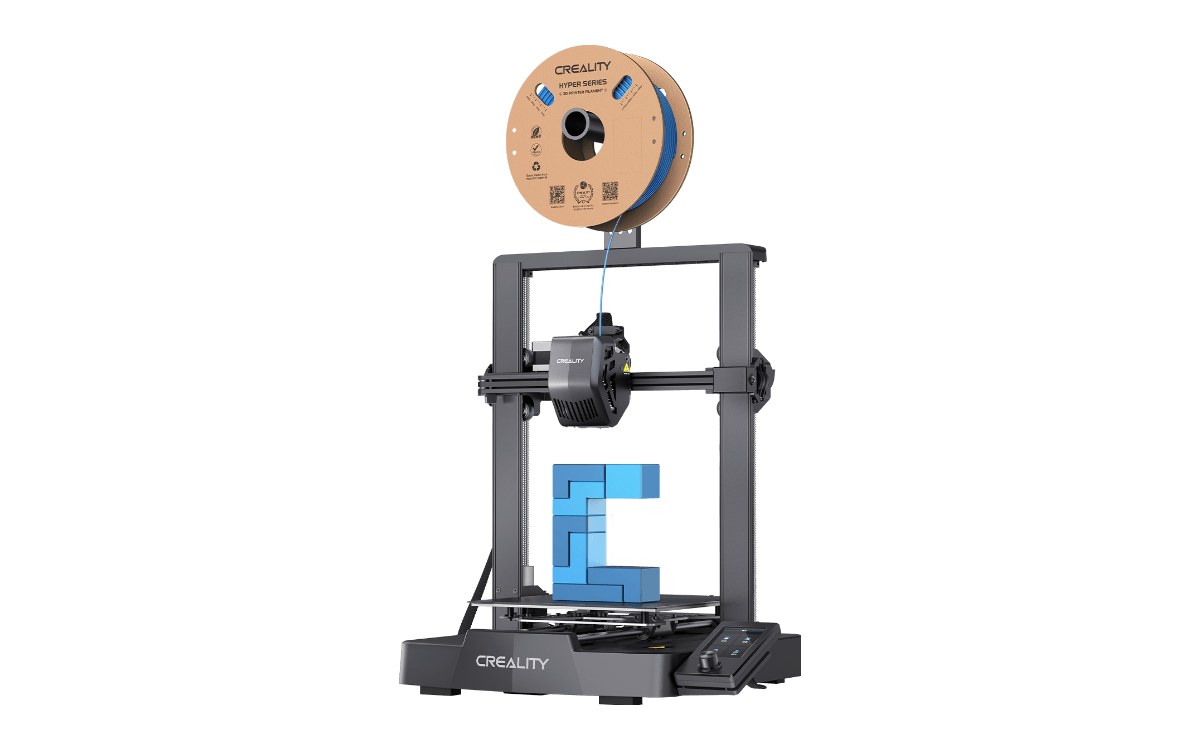
The Ender-3 V3 SE is the lowest-priced FDM printer on this page at $179. Creality lists a 220 x 220 x 250 mm build volume, a direct drive extruder, CR Touch auto leveling and speeds up to 250 mm/s. It prints one color at a time and has an open frame.
Buy it if you want the lowest entry price and you are happy to learn as you go.
Skip it if you want multicolor or plan to print ABS, which an open frame makes harder.
Cheapest resin: Elegoo Mars 5
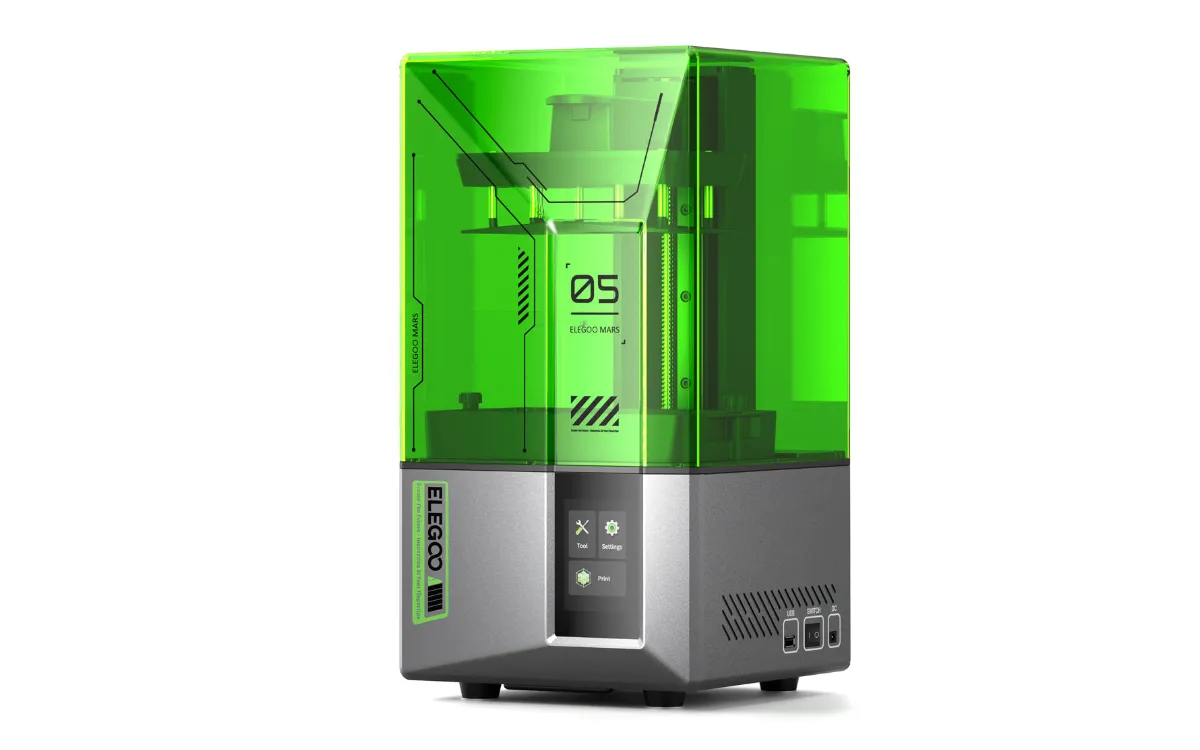
The Mars 5 costs $179 and prints from a 4K mono LCD, according to Elegoo. All3DP named it the best resin printer for beginners. It suits miniatures and small detailed parts. Add the resin extras above before you compare it with an FDM printer. For a sharper screen, the Elegoo Mars 5 Ultra review covers the step up.
Buy it if you want miniature-level detail for little money.
Skip it if you have nowhere ventilated to work.
Cheapest multicolor: Anycubic Kobra 4 Combo
Multicolor used to start well above this price. The Kobra 4 Combo is $299 with the ACE 2 Pro unit for four colors, per Anycubic’s US store. It has a 260 x 260 x 260 mm build volume and dries filament at up to 65C while it prints. One limit: TPU 95A cannot go through the ACE 2 Pro. Count the purge waste before you buy, and see our best multicolor 3D printer guide for the other options.
Buy it if you want color prints on a budget.
Skip it if you mostly print single-color functional parts. You would pay for hardware you never use.
Best value long term: Elegoo Centauri Carbon 2
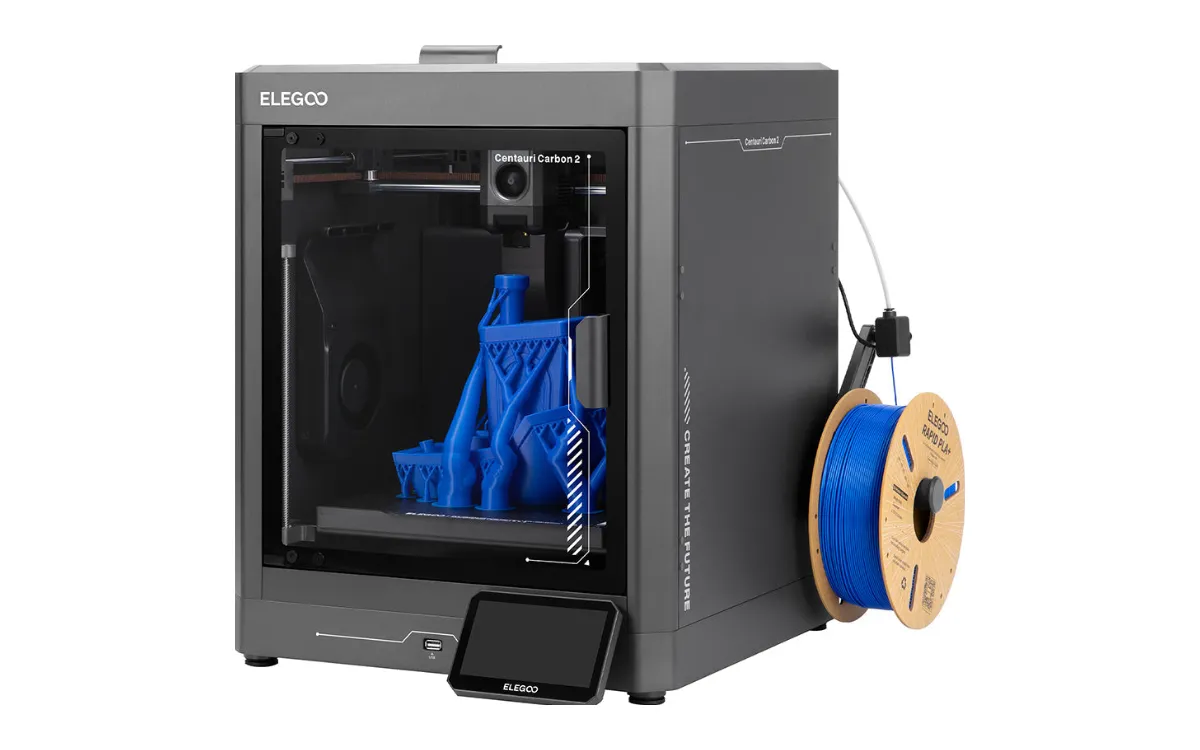
At $319, the Centauri Carbon 2 is an enclosed CoreXY printer, per Elegoo. The enclosure holds heat, which opens up tougher materials, and the CoreXY layout is built for speed. If you already know you will print a lot, spending more now costs less than replacing a starter printer next year. The Centauri Carbon 2 review has the full spec sheet.
Buy it if you want one printer that handles most materials.
Skip it if your budget stops at the starter tier.
When spending more makes sense: Creality K2 Plus Combo

The K2 Plus Combo costs $1,199. Creality lists a 350 x 350 x 350 mm build volume and the CFS unit for multicolor printing. It is the most expensive printer here. It earns that price only if you print big parts or print often. For a first printer, it is too much machine.
Buy it if you need a large, enclosed multicolor printer now.
Skip it if this is your first printer.
Is 3D printing cheaper than buying things?
Sometimes. A replacement clip, knob or bracket that costs a few dollars in a store costs cents to print, and you have it the same day. Toys, gifts and decor often come in under retail too. Mass-produced items like phone cases are usually cheaper to buy. A printer only pays for itself if you use it, so be honest about how often you will. Buying one as a present? Our 3D printer gift guide matches printers to people.
How do you keep 3D printing cheap?
- Buy on sale. Our 3D printer deals page sorts current discounts from biggest to smallest.
- Start with PLA. It is the cheapest and easiest filament to print.
- Print a small test piece before a long print.
- Use less infill and fewer supports where a part does not need the strength.
- Buy filament in full 1 kg spools, not sample packs.
- Check whether you need a computer at all. Our guide to 3D printing without a computer covers printers you run from a phone.
3D printing cost FAQ
Is 3D printing expensive?
Not for most hobbyists. A starter printer costs $179 and a small PLA print uses about a dollar of plastic. Costs rise with resin cleanup, multicolor purge waste, failed prints and upgrades.
How much does it cost to 3D print something?
Most small PLA prints cost well under $5 in material. At $22 a kilogram, a 50 gram print uses $1.10 of plastic, and a 10 hour print at 100 watts uses about 18 cents of power at the average US rate.
How much is a 3D printer?
A starter FDM printer like the Creality Ender-3 V3 SE costs $179. An enclosed mid-range printer like the Elegoo Centauri Carbon 2 costs $319. A large multicolor printer like the Creality K2 Plus Combo costs $1,199.
What is the cheapest 3D printer?
Of the printers we track, the cheapest are the Creality Ender-3 V3 SE at $179 and the Elegoo Mars 5 resin printer at $179. Our price tracker shows the full list.
Thinking about selling what you print? Our guide on how to start a 3D printing business covers the ideas that sell, marketplace fees and how to price a print.
Sources
- Creality, Elegoo and Anycubic US official product pages (prices, specs and stock).
- Snapmaker, How to Calculate Your 3D Printing Costs (filament per gram, power draw, nozzle life, failure allowance).
- Snapmaker, What Is Purge in 3D Printing? (purge tower waste).
- Siraya Tech, “Is 3D Printing Expensive?” (filament, resin and maintenance cost ranges).
- U.S. Energy Information Administration, Short-Term Energy Outlook (average residential electricity price).