
Types of 3D Printer Filament: PLA vs PETG vs ABS vs TPU
The four 3D printer filament types most people need are PLA, PETG, ABS (or ASA) and TPU. Start with PLA: it is the easiest to print and fine for most models. Move to PETG for tougher, heat-resistant parts, TPU for flexible parts, and ABS or ASA only if you have an enclosed printer.
Temperatures below are typical ranges from filament makers' labels; always use the range printed on your spool. We don't own or test printers; how we research.
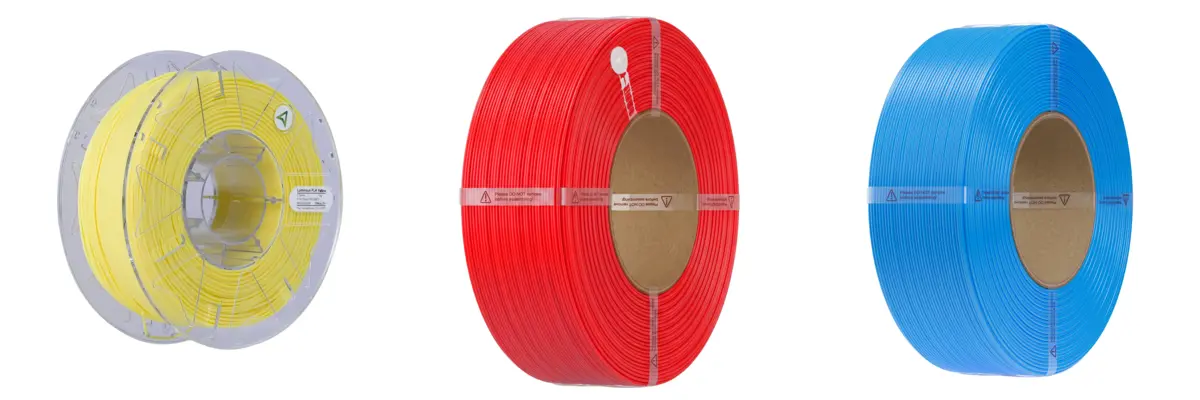
Image: Creality
Which filament should a beginner use?
PLA. It prints at low temperatures, barely warps, smells faintly sweet rather than toxic, and works on every filament printer, open frame or enclosed. Most printers ship with PLA profiles already tuned. Learn on PLA first, then try PETG once your prints come out clean.
3D printer filament comparison chart
Print this chart and stick it next to your printer.
| Filament | Nozzle | Bed | Ease | Best for | Watch out for |
|---|---|---|---|---|---|
| PLA | 190 to 220°C | 0 to 60°C | Easiest | Models, toys, decor, prototypes | Softens around 55 to 60°C (a hot car) |
| PETG | 220 to 250°C | 70 to 85°C | Easy | Tough parts, outdoor use, brackets | Strings more, sticks too hard to smooth PEI |
| TPU | 210 to 230°C | 30 to 60°C | Medium | Flexible parts: cases, gaskets, feet | Print slowly; Bowden printers struggle |
| ABS | 230 to 260°C | 90 to 110°C | Hard | Heat-resistant parts, car interiors | Warps and cracks; fumes need ventilation |
| ASA | 240 to 260°C | 90 to 110°C | Hard | Outdoor parts that face the sun | Same as ABS: enclosure and ventilation |
| Nylon | 240 to 270°C | 70 to 90°C | Hard | Gears, hinges, wear parts | Soaks up moisture fast; dry before printing |
Typical ranges compiled from filament makers' published settings. Chart: Get 3D Printer, free to share with a link back.
PLA vs PETG: which should you use?
Use PLA for anything that stays indoors and out of the heat; use PETG when a part must survive heat, sunlight, impact or bending. PETG is tougher and handles roughly 80°C before softening, against about 60°C for PLA. The trade-off is printing: PETG needs a hotter nozzle and bed, strings more, and can bond so hard to a smooth PEI sheet that it tears the surface, so use a textured sheet or a glue stick release layer.
ABS vs PLA: what is the difference?
ABS handles heat far better, softening near 100°C, and can be sanded and smoothed with acetone vapor. PLA is much easier to print. ABS shrinks as it cools, so on an open-frame printer it warps off the bed and cracks between layers; it also gives off fumes that need ventilation. Print ABS, or its UV-resistant cousin ASA, only on an enclosed printer.
When should you use TPU?
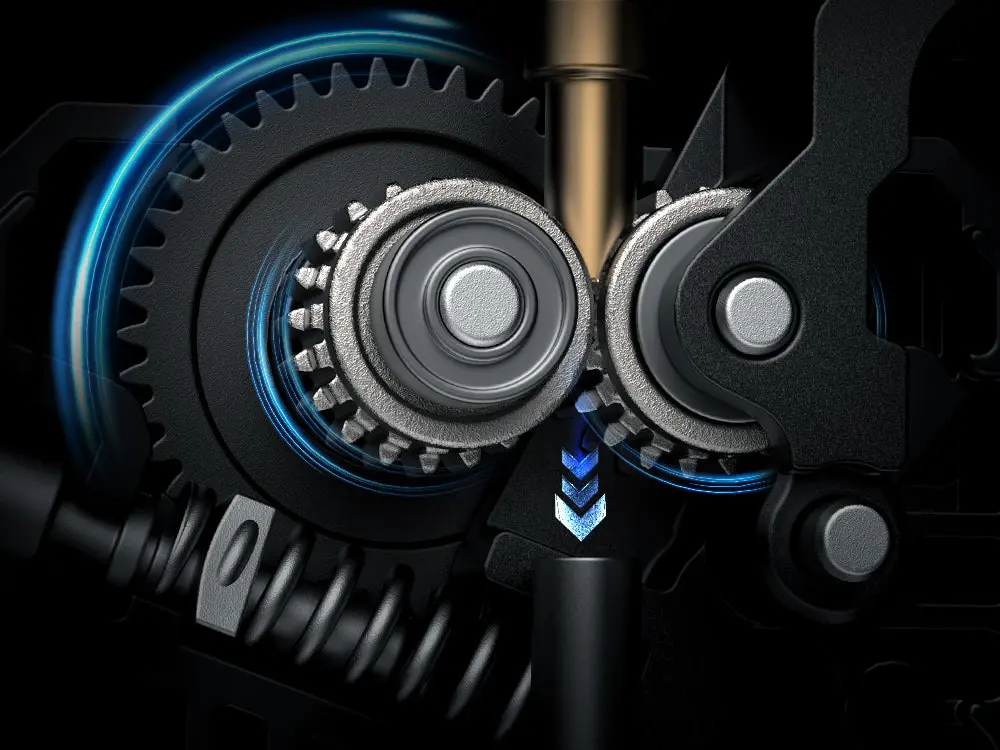
A direct drive extruder. Image: Creality
Use TPU when a part has to bend or absorb shock: phone cases, bumpers, seals and non-slip feet. Print it slowly, around 20 to 30 mm/s to start, with little or no retraction. Printers with a direct drive extruder, where the motor sits right above the nozzle, handle TPU far better than Bowden-tube printers. The budget Creality Ender-3 V3 SE is direct drive.
Does filament go bad?
It absorbs moisture from the air. Damp filament pops and hisses as it prints, strings badly and comes out weak or rough. PLA tolerates open air for weeks; PETG, TPU and especially nylon need drying sooner. Store spools in a sealed bag or box with desiccant, and dry damp spools in a filament dryer before printing.
What filament diameter do you need?
Almost every current consumer printer uses 1.75 mm filament. Some older and professional machines use 2.85 mm. Check your printer's spec sheet before buying; the two sizes are not interchangeable.
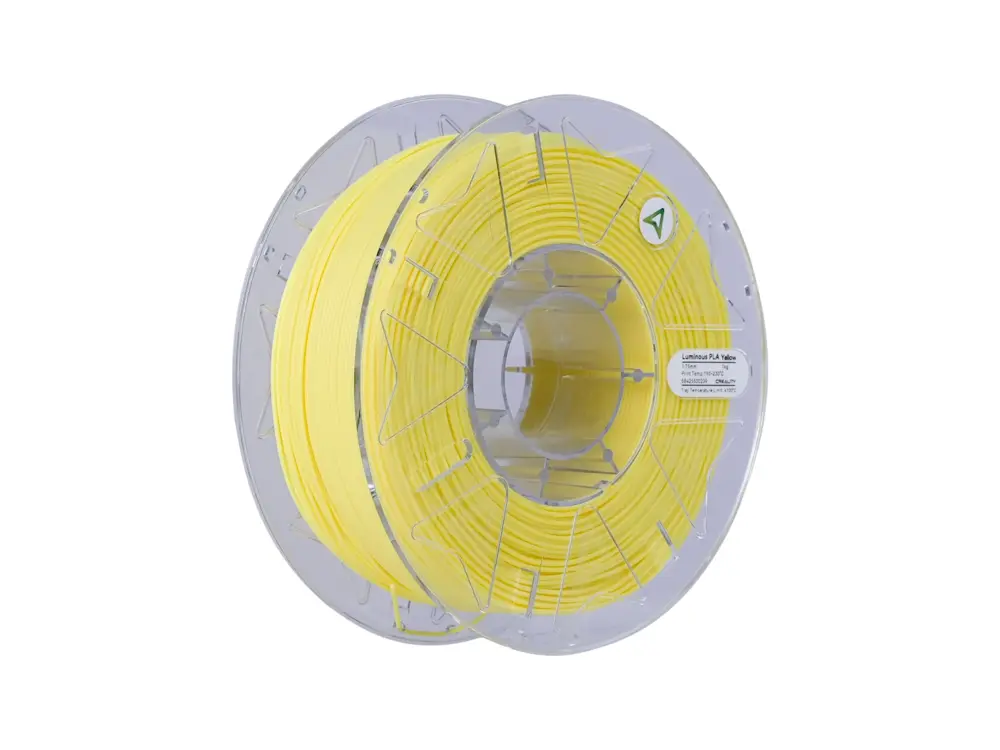
Image: Creality
Which printers handle which filaments?
| Printer type | Prints well | Avoid |
|---|---|---|
| Open-frame bed slinger, nozzle up to 260°C (for example the Ender-3 V3 SE) | PLA, PETG, TPU | ABS, ASA, nylon |
| Enclosed printer with a hotter nozzle | PLA, PETG, TPU, ABS, ASA, often nylon | Carbon fiber blends unless the nozzle is hardened |
Comparing machines? See our 3D printer reviews or the best 3D printers under $300.
Where to go next
Temperature, flow and retraction for each new filament.
Filament FAQ
What is the easiest 3D printer filament to use?
PLA. It prints at low temperatures, barely warps and works on every filament printer.
Is PETG stronger than PLA?
PETG is tougher and more heat resistant: it bends before it snaps and softens around 80°C, against about 60°C for PLA. PLA is stiffer but more brittle.
Can I print ABS without an enclosure?
Small parts sometimes work, but ABS usually warps and cracks on an open printer, and its fumes need ventilation. An enclosed printer is the reliable way.
What filament is best for flexible parts?
TPU. Print it slowly on a direct drive printer with little or no retraction.
How should I store filament?
In a sealed bag or box with desiccant. PETG, TPU and nylon absorb moisture faster than PLA and need drying when they start to string or pop.
Sources
- Filament makers' published print settings and spool labels (temperature ranges)
- OrcaSlicer wiki (filament profiles and calibration)
- Creality, Ender-3 V3 SE product page (supported filaments)
Researched and written by Ric Ruben.